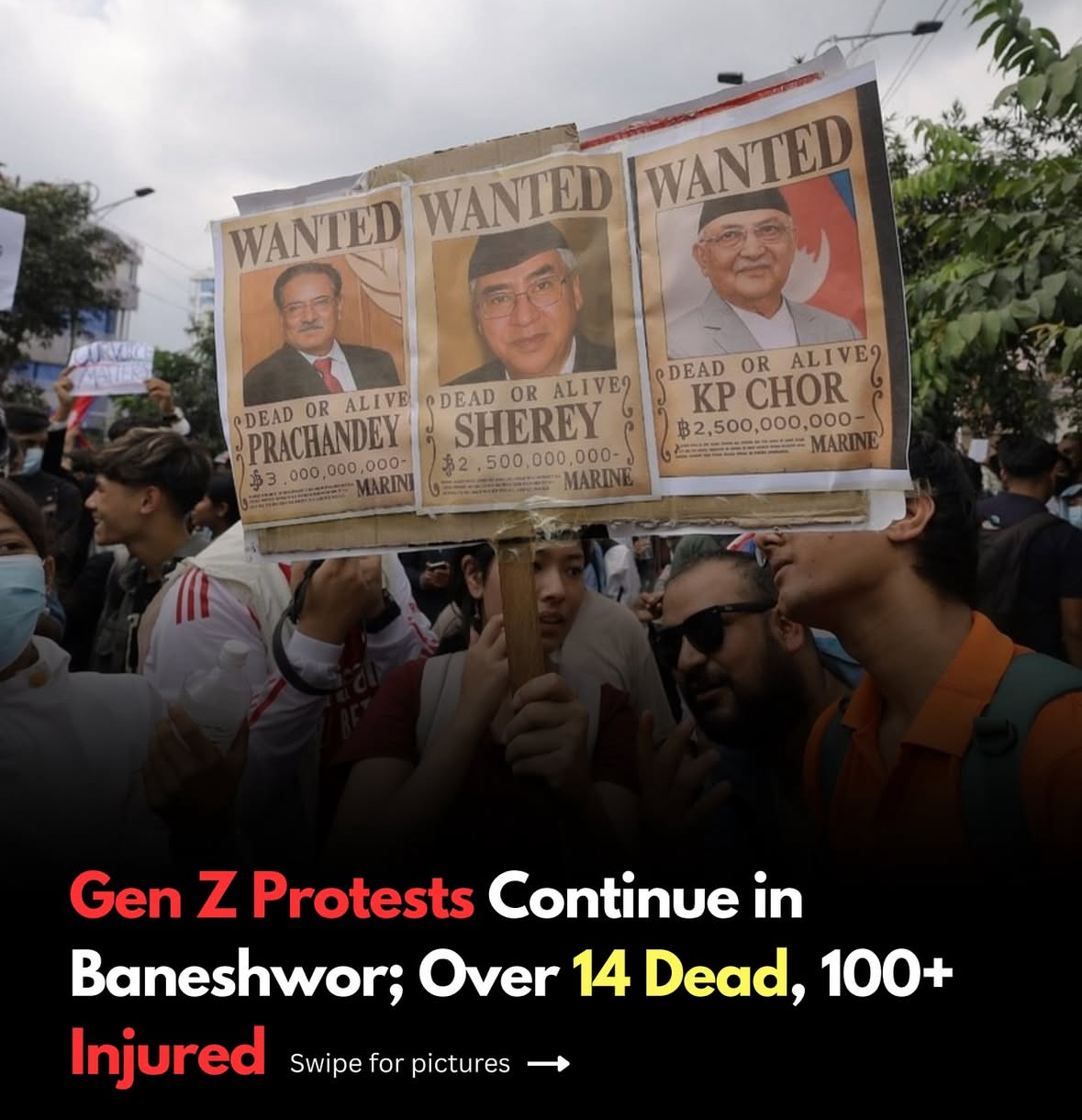
Nepal is burning—not just with anger but with grief, betrayal, and an unquenchable
thirst for truth.
On the evening of September 8, 2025, Nepal witnessed one of the
darkest days in its democratic history—a day when bullets replaced words and protests
turned into funerals.
What began as a fight for freedom of speech spiraled into a deadly crackdown, leaving more than 20 dead and more than 250 injured. Among the dead? School and college students—some still wearing their uniforms.
The Home Minister, Ramesh Lekhak, resigned!!!
The deadliest single-day crackdown in Nepal in years. But resignation doesn’t bring back lives.
The Spark That Ignited the Inferno
The government’s decision to ban 26 social media platforms, including Facebook, X, and YouTube, citing “failure to register under state rules”, was the last straw for a generation already fed up with systemic rot.
But here’s the truth people whispered among peoples, and yelled in the streets:
This was never about registration.
This was about corruption.
For months, social media had been the people’s courtroom. Youth-led exposés revealed the lavish lifestyles of politicians’ children—draped in designer brands, flaunting luxury cars, sipping champagne in elite clubs. All this, while ordinary Nepalis struggle with unemployment and rising inflation. The posts went viral. The hashtags trended. And the government panicked.
So they pulled the plug.
Protests, Bullets, and a Bloody Silence
When the government thought they had silenced dissent by banning social media, the streets of Kathmandu roared louder.
Tens of thousands marched toward the Federal Parliament building in New Baneshwar, chanting:
“End Corruption!”
“Down with Oli!”
A student shot in school dress during the protest.
The police tried to contain the crowds with tear gas and baton charges. But when protesters broke through the cordon, something happened that will haunt Nepal for decades:
The order to fire.
It was claimed that rubber bullets were used, however, after examining the injured (protesters), the doctors reported they were caused by metallic bullets.
Firing gun shots to students on dress, is violation of International Rights.
Hospitals Turned Battlefields
"It's 12:30am and I can still hear the ambulance sirens outside my house", said one of
the residents of Kathmandu.
Further what was more chilling was what happened in
the hospital. Eyewitnesses report police storming hospitals,
threatening doctors, harassing grieving families. One doctor, standing her ground,
told officers:
“Do whatever the government says, but in this hospital, everyone is a patient and has the right to be treated.”
Behind her, a voice warned:
“Why do you want to drag yourself to death?”
This is not law enforcement. This is tyranny in uniform.
Prime Minister Oli expressed “sorrow over the dead”, promised compensation for families, and free treatment for the injured. Further he said than an
investigation committee is set up to. But the streets tell a different story.
The
whispers grow louder:
“The investigation committee is just a cover-up.”
A “so-called” inquiry commission was formed the same evening. But Nepalis know the script—delay, deny, distract.
"This government has failed", said doctor when police forcefully entered hospital to kill the protesters
Nepal on the Brink of a Digital Blackout
People in there home being scared of the fact that police can barge in anytime
Rumors now swirl of a total internet shutdown—a complete blackout so the world never learns what really happened. If true, this would be the final nail in Nepal’s democratic coffin.
"People who so ever was raising their voices were shut down by the bullets", said one of the protestant.
Has the Freedom of Speech stolen from People?
Was Monarch better than Democracy?
Police even barged inside the house of the protestant and beated them brutally. Does that mean that there is no save place for the citizens of Nepal?
The Rotten Core: Corruption
Let’s not sugarcoat it: This massacre was not about social media. It was about power and corruption.
Nepal’s political elite wanted the truth erased, but the truth bled
on the streets of Kathmandu.
From the expensive foreign vacations of ministers’ children to the luxury cars parked outside government homes, social media
became the mirror that reflected their greed.
Instead of cleaning the system, they banned the mirror.
Remember Bangladesh’s corruption scandals? How the ruling elite siphoned millions, while journalists exposing the truth were jailed?
Nepal is walking the same
road—crushing voices, covering crimes, and killing democracy in daylight.
“I would rather get hit by the government’s bullet than back down.”
Will the World Watch in Silence?
A girl was returning home after the protest when the darkness swallowed her path. Dragged into an open ground, she was thrown to the earth. Police boots crushed her body. Their batons rained down like storms, beating her until her screams dissolved into the night. They didn’t see a girl—they saw a voice they wanted to silence.
Nepal’s youth have drawn a line in blood. This is not just a fight for social media; it’s a fight for truth, justice, and freedom from corruption.
But as ambulances wail through Kathmandu and families mourn their dead, one question echoes louder than any slogan:
Will the world let Nepal disappear into darkness?
What do you think? Should governments have the right to silence social media in the name
of “rules”?
Or is this just corruption wearing a mask?